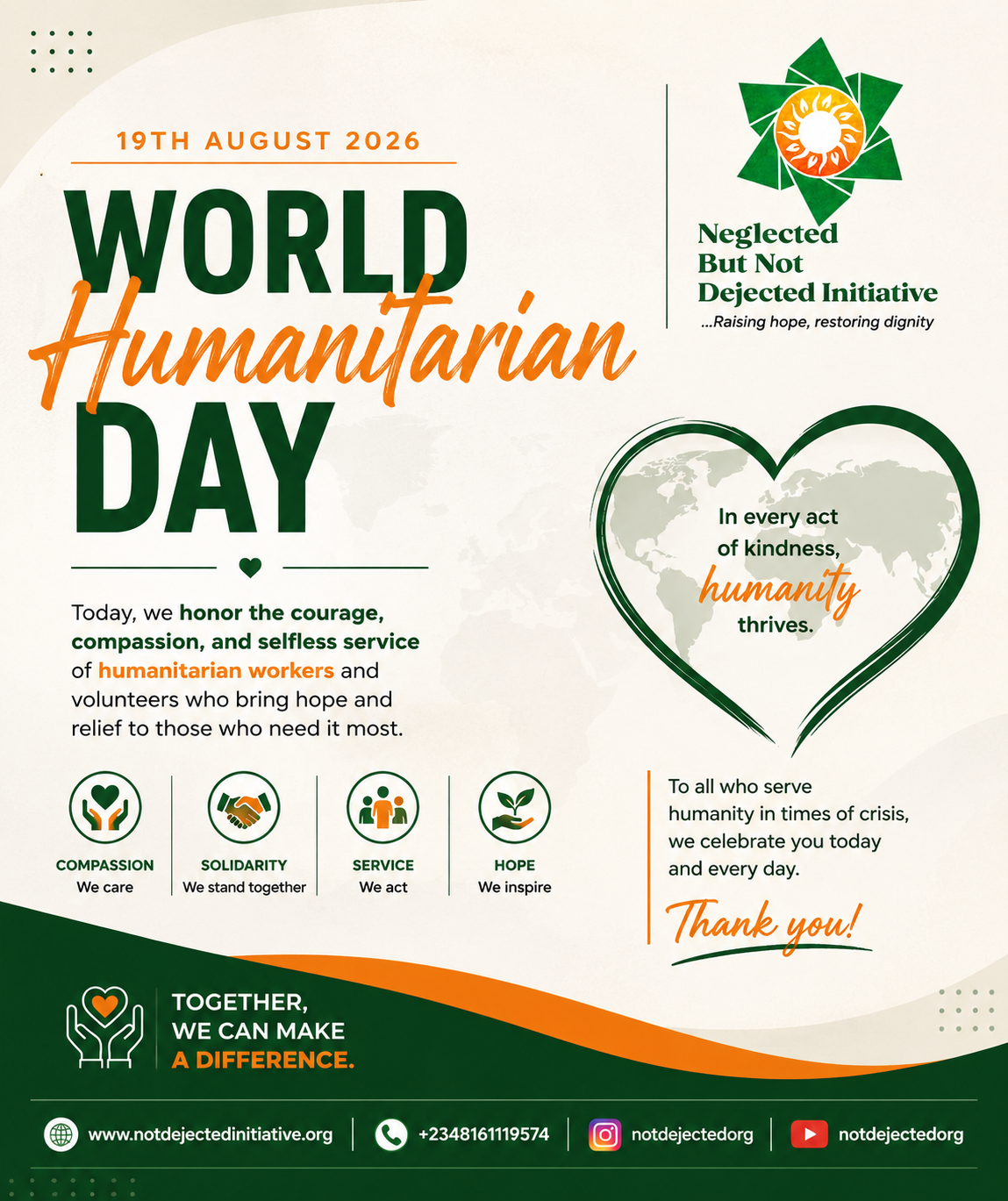
Every year on 19 August, World Humanitarian Day draws attention to people who serve others during conflict, displacement, disaster, poverty and other difficult situations. It is a day to recognise humanitarian workers, volunteers, health professionals, community leaders and organisations whose daily work brings relief and support to people facing hardship. For many displaced families across Nigeria, humanitarian assistance is often linked to basic needs such as food, healthcare, shelter, education, protection and emotional support. Behind each intervention is a person willing to enter a difficult situation, listen to people, understand their needs and respond with care.
At Neglected But Not Dejected Initiative, humanitarian service is rooted in one principle, every person deserves dignity. Our work with vulnerable and displaced communities has shown us how important consistent support is. A medical outreach means more than providing treatment. It gives families access to health information and services they might otherwise struggle to receive. Educational support gives children an opportunity to keep learning despite disruption. Community engagement gives people room to speak about their needs and take part in decisions affecting their lives.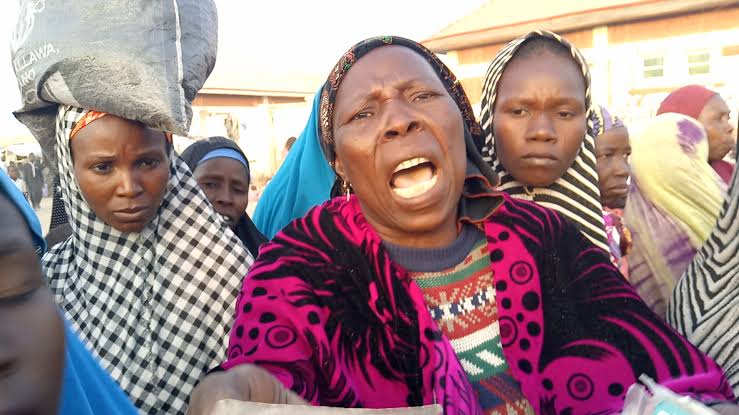
Humanitarian work also requires listening. People affected by crisis understand their realities better than anyone else. Effective support starts by hearing their concerns, respecting their experiences and involving them in the response. This approach helps humanitarian organisations move away from assumptions and focus on support people find useful. World Humanitarian Day also reminds us of the people working quietly behind many community interventions. Volunteers organise activities, health workers attend to patients, field teams collect information, partners provide resources, community leaders coordinate residents and donors support programmes. Each role contributes to the final outcome.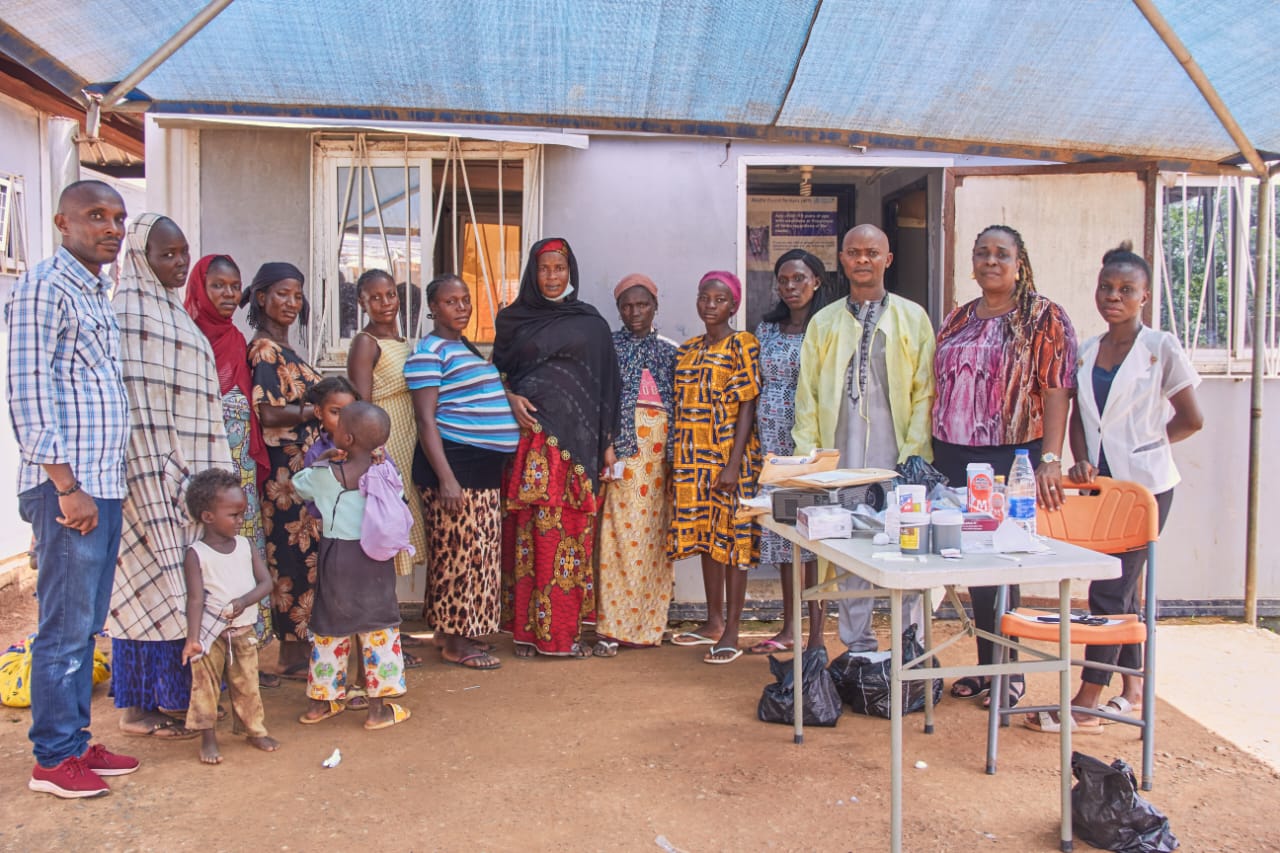
There is still much work ahead. Across many communities, families continue to face displacement, poor access to healthcare, interrupted education and limited economic opportunities. Responding to these challenges requires cooperation between government institutions, civil society organisations, private organisations, development partners, community leaders and individuals. For Neglected But Not Dejected Initiative, the commitment remains clear. We will continue to support communities with compassion, respect and practical interventions focused on improving lives. On World Humanitarian Day 2026, we recognise every humanitarian worker and volunteer who continues to serve despite difficult conditions. We appreciate every partner and supporter who makes community interventions possible. Most importantly, we stand with individuals and families affected by crisis whose strength continues to shape the work we do.
Humanitarian service begins with seeing people, listening to them and treating them with dignity.
Together, our actions matter.
Neglected But Not Dejected Initiative
Raising hope, restoring dignity.
REFERENCES
- United Nations. (2026). World Humanitarian Day. United Nations.
www.un.org/en/observances/humanitarian-day
-
United Nations General Assembly. (2008). Strengthening of the coordination of emergency humanitarian assistance of the United Nations (A/RES/63/139). United Nations.
www.un.org/en/observances/world-humanitarian-day
-
United Nations. (2023). World Humanitarian Day: Honouring our commitments to the people we serve, and to the humanitarians who serve them. UN Chronicle.
www.un.org/en/un-chronicle/world-humanitarian-day-honouring-our-commitments-people-we-serve-and-humanitarians-who-serve
-
United Nations High Commissioner for Refugees. (2026). Figures at a glance. UNHCR.
www.unhcr.org/about-unhcr/overview/figures-glance
-
International Committee of the Red Cross. (2025). The Fundamental Principles: 60 years of humanity in action. ICRC.
www.icrc.org/en/article/fundamental-principles-60-years-humanity-action
-
United Nations Children’s Fund. (2020). Core commitments for children in humanitarian action. UNICEF.
www.unicef.org/media/61551/file
-
Sphere Association. (2018). The Sphere handbook: Humanitarian charter and minimum standards in humanitarian response. Sphere Association.
www.spherestandards.org/handbook
-
Sphere Association. (2025). Humanitarian standards resources. Sphere Association.
www.spherestandards.org/resources
-
CHS Alliance, Groupe URD, & Sphere Association. (2024). Core Humanitarian Standard on Quality and Accountability. CHS Alliance.
www.corehumanitarianstandard.org
-
United Nations. (2026). International days and weeks: World Humanitarian Day, 19 August. United Nations.
www.un.org/en/observances/list-days-weeks